SPAIN · HEALTH & DAILY LIFE · NOV 14, 2026
Why Do People in Spain Live Longer? What the Data—and Daily Life—Really Tell Us
Spain ranks among Europe’s longest-lived countries. Forget miracle foods and siesta myths: the more interesting story involves everyday choices, public systems and the limits of the statistics.
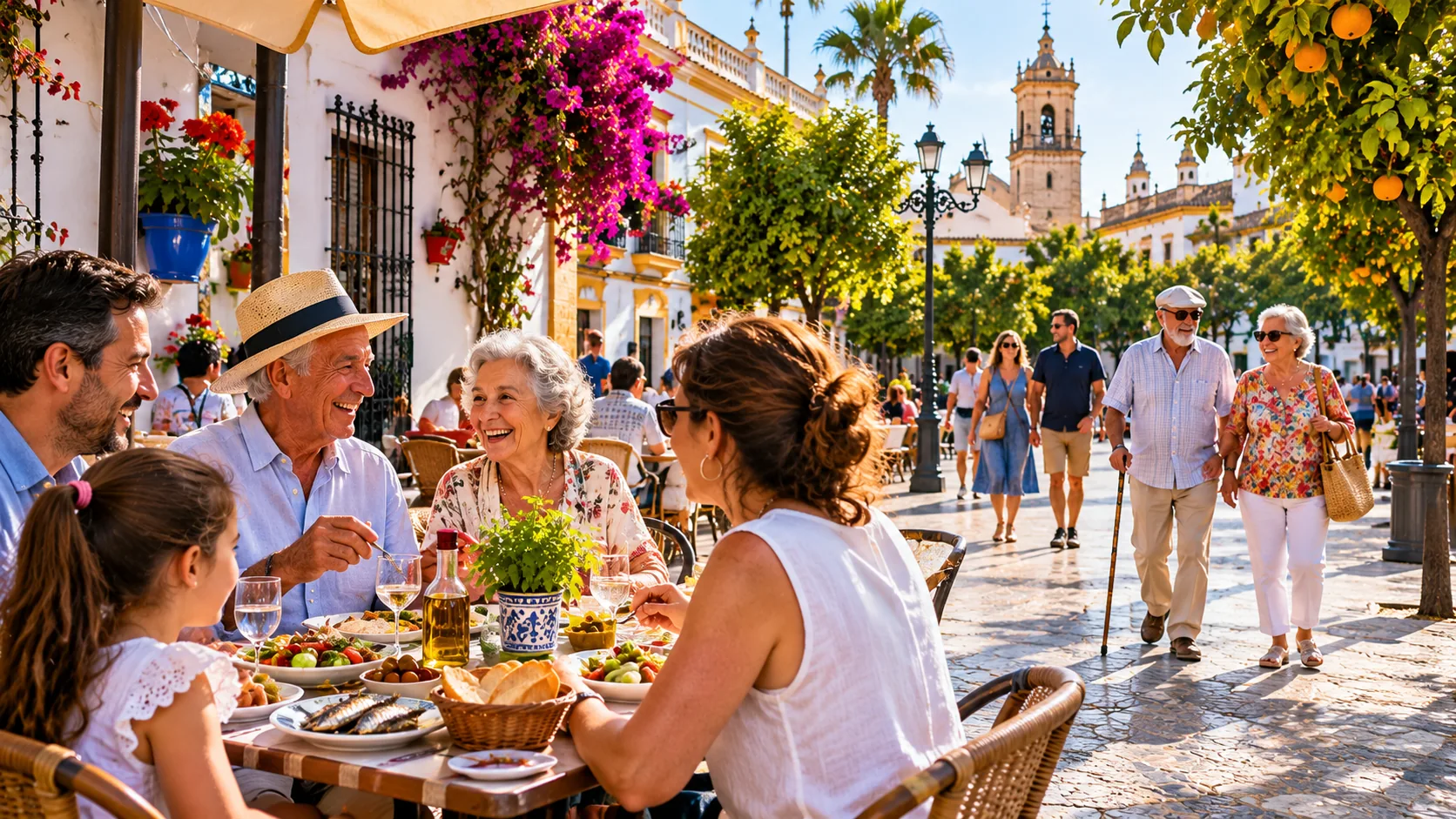
Original GOODFINDS illustration of an imagined Spanish plaza; it does not depict a scientific study or real identifiable location.
An article published by GaminTraveler on November 14, 2026 asks why Spaniards live so long when some of their everyday habits appear relaxed rather than optimized. It is an appealing question for Americans considering Spain: could the ordinary rhythm of shopping, walking, eating and seeing friends make daily life healthier?
Before turning culture into a health promise, compare like with like. Eurostat reports life expectancy at birth of 84.0 years in Spain in 2024, while final U.S. CDC data report 79.0 years in the United States. The roughly five-year gap is real in those datasets, but it does not tell us how much credit belongs to food, healthcare, income, lifestyle, mortality at younger ages or other causes.
1. Start with what life expectancy actually measures
Life expectancy at birth summarizes the death rates observed in a given period. It does not predict the age a particular person will die, and it is not a score for the health of every resident. Comparing countries also requires attention to how deaths are recorded, age patterns, public health, inequality and access to treatment.
Eurostat’s completed 2024 comparison puts Spain at 84.0 years and the EU average at 81.5. The CDC reports 79.0 for the U.S. in the same year. Those are good starting figures, but they cannot prove that a Spanish dinner hour or a weekend walk caused the gap.
2. A walkable routine can make activity less of a project
A resident who can walk to the bakery, bus stop, market or pharmacy has opportunities to move without booking a gym class. Spanish town centers often make some of these trips possible, although steep streets, extreme heat, disability, rural distances and local transport gaps can change the experience. Walking is not universal and formal exercise remains valuable.
The World Health Organization recommends at least 150–300 minutes of moderate physical activity each week for adults, along with strength work on at least two days. Walking for transport can help contribute toward that target, but it is not a replacement for all physical-activity needs.
3. A Mediterranean-style pattern is more useful than a miracle ingredient
Meals in Spain can include vegetables, legumes, fruit, fish, olive oil and shared dishes, but Spanish diets differ widely. Bread, sweets, fried foods and processed snacks exist too. No country follows one universal menu and no single ingredient explains national longevity.
For a practical experiment, focus on a sustainable pattern: cook more meals from basic ingredients, add beans or vegetables regularly, eat appropriate portions and choose a routine you can afford. Enjoying an occasional shared meal can be positive without making food a moral competition.
4. Social connection matters, but not everybody has a built-in community
A neighborhood café, familiar shopkeepers and frequent family meals can make social contact easier for some residents. That matters because loneliness and isolation are associated with poorer health outcomes; a 2025 WHO commission called for governments to take social connection seriously. But some older adults, immigrants and people living alone in Spain are isolated too.
Moving abroad can initially reduce social support even if your destination looks welcoming. Language ability, accessibility, work schedules and proximity to family often determine whether the social side of life improves.
5. Healthcare access is an important system—not a free pass
Spain has a public health system, but entitlement, registration, coverage and waiting times depend on circumstances. Newcomers should not assume every residence route immediately grants the same access to public care. Preventive services, childhood care, vaccinations and treatment for chronic disease may contribute to population health, alongside broader economic and historical factors.
A good relocation plan checks who will cover you on arrival, how you obtain a health card when eligible, whether local primary-care clinics are available, and what prescriptions, dental care or specialists cost.
6. The siesta is not a national longevity prescription
Long lunches and midday pauses are part of Spain’s cultural image, but many office workers and families do not take daily naps. Some people work split shifts and finish late. Sleeping less at night is not automatically compensated by a short rest in the afternoon.
Treat sleep as an individual health requirement rather than a stereotype. A routine that allows enough sleep, daylight, regular activity and manageable obligations is more useful than copying a picturesque midday schedule.
7. Public space, daylight and everyday belonging can help a routine
Walkable plazas, parks, promenades and social spaces encourage people to leave home and meet neighbors. But climate and architecture matter: heat waves, poor housing insulation, pollution and unequal access to shade can make outdoor activity harder or unsafe.
The practical lesson is not “be outside all day.” It is to arrange pleasant and safe daily activity—early walks in hot weather, shaded seating, hydration and accessible routes for people of different ages and abilities.
8. Do not mistake smoking or alcohol for a health secret
Some travel writing romanticizes wine with lunch or minimizes smoking because a population has high life expectancy. This is a serious mistake. Tobacco is harmful, and the WHO’s cancer agency stresses that even low alcohol consumption can increase cancer risk. High national longevity does not make individual risky behaviors safe.
Spanish life also includes financial stress, unemployment, regional disparities and families facing care burdens. Health differences reflect many influences accumulated across a lifetime, not a simplistic story that everyone is relaxed or that healthcare has no problems.
9. The 14-day Spanish-routine experiment
You can test some ideas without emigrating. On days one through three, walk an appropriate errand rather than driving if it is safe. On days four through six, cook simple meals and eat without rushing. On days seven through ten, make plans for repeated social contact. On the final four days, evaluate sleep, stress, access to care and the parts of the routine that are realistic for your family.
If you do move to Spain, use those lessons to choose a neighborhood: a good doctor, useful transport, attainable groceries, a safe route for walking, and people with whom you can build real connections. The goal is a healthier life that fits you—not a promise that changing countries adds five years.
The takeaway: lifestyle plus systems, without easy slogans
Spain’s high life expectancy is worth studying, and its ordinary routines may offer ideas. But population outcomes are shaped by healthcare, mortality patterns, inequality, environment and countless behaviors interacting over time. The better relocation question is whether you can create a safe, connected and sustainable everyday life in the town you choose. This guide is educational, not personalized medical advice.
Sources and methodology
This independent guide is inspired by the GaminTraveler article, but its comparisons rely on the official sources linked below. 2024 data were the most recently comparable figures used here; correlations do not establish individual causation.
What does a healthy daily routine look like where you live?
Share an everyday observation or a practical tip. Comments are reviewed before publication.
What surprised you most about living abroad?
Share a firsthand insight or useful local tip. Reader comments are moderated.
Leave a comment