MILITARY FAMILIES · PET TRAVEL · PRACTICAL GUIDE · UPDATED NOVEMBER 2026
PCS Overseas With a Dog or Cat? The Military FADL, FAVN Test & Timeline Guide
An early-start checklist for military families and eligible retirees: on-post or civilian veterinarians, DoD FADL forms, rabies blood tests, quarantine clocks and flight planning.
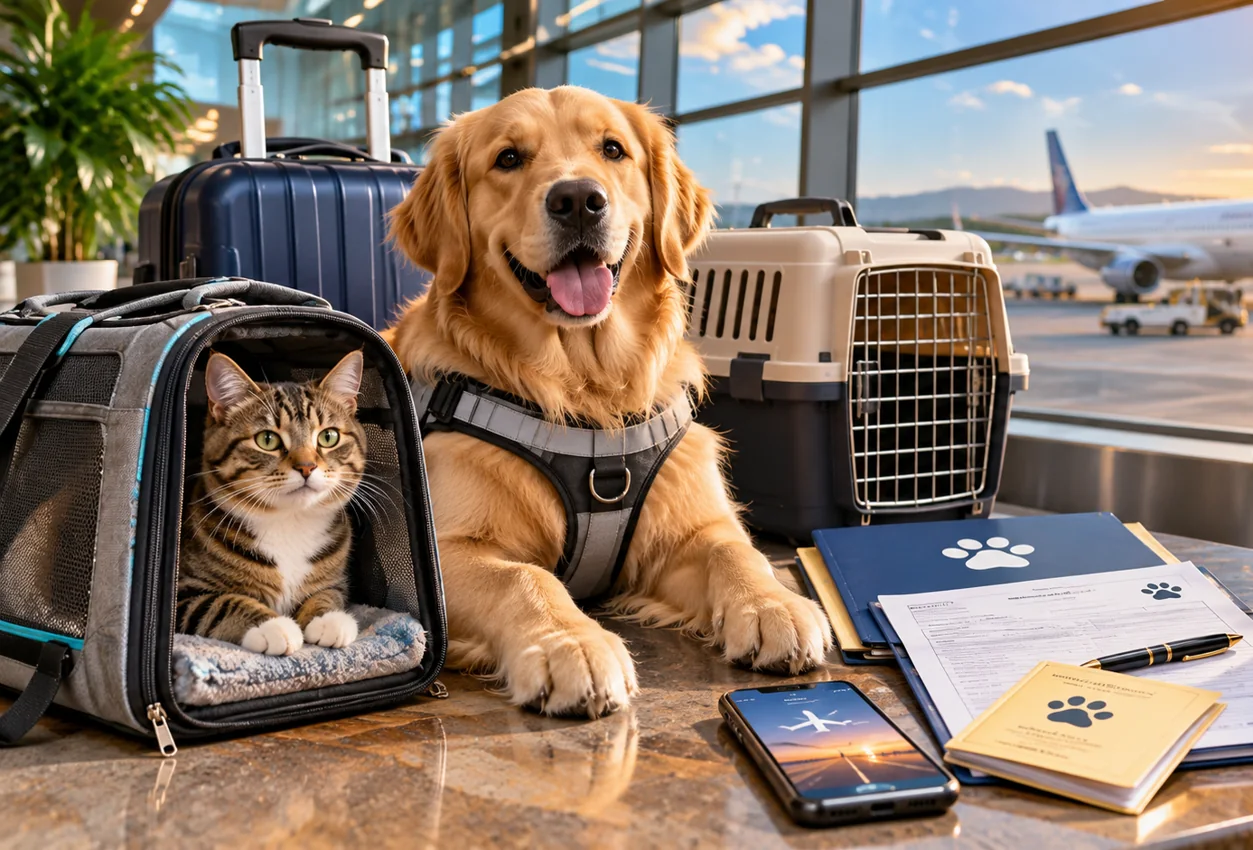
Start with orders, destination and return rules
The hardest part of an overseas pet move is often not the flight; it is discovering a waiting period after flights or housing have already been booked. Open the official import instructions for your destination, any transit country, and a possible return to the United States as soon as you know a move is likely.
Ask your installation veterinary treatment facility, transportation office and airline which steps they handle—and which remain the owner’s responsibility. A permanent change of station does not itself waive the destination’s import requirements. Pets can be refused entry or quarantined at your expense if records are wrong.
- Make a folder for each animal: microchip number, every rabies certificate, blood test report, airline confirmation, health certificate and any import permit.
- Choose your actual route before relying on generic advice: Europe, Japan, Guam and Hawaii do not share one waiting period.
- Ask early whether military pet transportation support or reimbursement applies to your orders; never assume your airline can carry a large pet.
Who can use the DoD FADL rabies antibody test?
The Defense Food Analysis and Diagnostic Laboratory (FADL) says its FAVN testing service is reserved for DoD beneficiaries authorized treatment at DoD medical treatment facilities. The listed categories include eligible active-duty members, military retirees and certain federal DoD workers. Eligibility—not simply owning a military ID or living near a base—must be verified before submission.
FAVN stands for fluorescent antibody virus neutralization. It measures a pet’s antibody response to rabies vaccination; it is not a substitute for the rabies shot itself, a travel health certificate or quarantine paperwork. Not every destination asks for a FAVN. For example, an ordinary dog or cat traveling directly from the United States to Spain or Germany usually does not need a rabies titer test under the standard EU route.
- Check the current FADL eligibility instructions at army.mil/fadl before paying for a blood draw.
- The FADL page lists $70 per privately owned dog or cat for FAVN testing, excluding veterinary and shipping charges.
- The same page says results are typically expected 3–4 weeks after the laboratory receives the sample—not 3–4 weeks after your vet visit.
On-post clinic or civilian veterinarian: the practical route
An on-post veterinary treatment facility may help confirm rabies records, scan the microchip, arrange a draw and prepare destination paperwork. Appointment availability varies. If you use a civilian clinic instead, ask the clinic and FADL in advance whether that veterinarian can submit the eligible beneficiary’s sample and which exact form, signature and shipping rules apply.
The FADL submission guide uses Form D-132A for privately owned pets with DoD beneficiary status. It specifies the veterinarian’s original blue-ink signature and a properly identified serum sample; incomplete paperwork or damaged samples can delay processing. The guide recommends courier shipping that reaches the lab within 24–72 hours and says USPS does not deliver to the lab. The vet should follow the current laboratory instructions rather than relying on an older form saved on a phone.
- Do not draw blood until your veterinarian has checked the destination’s vaccine-to-sample interval.
- Match every microchip number and owner/pet name across the rabies record, laboratory request and destination documents.
- Confirm payment, sample packaging, courier selection and result delivery instructions with the submitting clinic.
Work backwards from the longest required waiting period
For Japan, pets arriving from a non-designated region generally need the correct microchip and two rabies vaccinations, a qualifying antibody test, and a 180-day waiting period measured from the blood-sampling date; advance import notification is normally due at least 40 days before arrival. Begin planning at least 7–9 months before the flight when starting from scratch.
For Hawaii, the direct-release or five-days-or-less program uses a passing FAVN and a minimum 30-day pre-arrival wait after the approved laboratory receives the blood sample, plus other conditions including two rabies vaccinations and advance paperwork. The state requires core documentation at least 10 days before arrival for the streamlined program. Guam has its own rules—do not assume Hawaii’s dates transfer.
For Spain and Germany, start with the microchip before rabies vaccination, continuous vaccination records and the current EU travel health certificate. A first valid rabies shot generally triggers at least a 21-day wait (or the manufacturer’s longer immunity period). A different 90-day/three-month antibody-testing timetable can apply when a pet originates in certain other countries.
- 9–12 months out: identify the destination, route, airline pet rules and any titer/quarantine requirements.
- 6–8 months out: complete vaccine sequence and FAVN sampling if your destination requires it.
- 4–8 weeks out: verify the lab report has reached the correct recipient and secure any permits or animal-space reservations.
- Final 10 days: arrange the country-specific health certificate, endorsement if required, and final veterinary exam.
Health certificates are a separate process
An eligible military veterinarian may issue certain destination certificates without a separate USDA endorsement, but that exception is limited. USDA specifically recognizes qualifying military government veterinarians for certain EU, Japan and South Korea pet movements; it does not automatically extend to every base contractor or civilian veterinarian. Other situations may require a USDA-accredited veterinarian and USDA endorsement.
For non-commercial entry to the EU under the U.S. route, the current certificate has timing rules that should be checked against the actual date of EU arrival. New EU certificate versions took effect in October 2026, so old downloadable forms may no longer be accepted. Ask your veterinary facility which document applies instead of using an unofficial template.
- Keep originals and digital copies together and travel with the paperwork in cabin baggage.
- Check requirements again before the final appointment; a rabies booster lapse or wrong chip sequence can invalidate the plan.
Before you book the pet’s flight
Request written airline confirmation that your pet has a reserved spot, not just that the human ticket has been paid. Check carrier measurements, weight, connection temperature restrictions, transit-country rules, breed restrictions and whether cabin, hold or cargo travel is offered. A long layover or separate ticket can create a different import scenario.
Budget for the vet appointment, test, courier, crate, airline pet charge, possible broker, destination registration and unexpected boarding. A pet that fails the country’s entry checklist may be quarantined, sent back or face other costly consequences.
- Ask: Is the flight operated by the airline I booked, or by a partner with different animal rules?
- Ask: Who will receive the FAVN original result: my clinic, me or the destination quarantine station?
- Ask: Can I change travel dates without restarting a vaccine or test clock?
DoD FADL quick questions
Can any civilian send samples to FADL? No: eligibility belongs to the animal owner, and only qualified DoD beneficiaries may use this service. An eligible owner working with a civilian veterinarian should confirm current submission procedures before sending anything.
Is a passing FAVN a quarantine waiver? Not by itself. You must also meet the destination’s vaccine history, waiting period, identification and documentation requirements.
Does my pet need FAVN to move to Spain from the United States? Usually not under the ordinary non-commercial U.S.-to-EU route. Confirm the actual origin and transit history with the current USDA page.
Official sources & verification
- DoD Food Analysis & Diagnostic Laboratory (FADL)
- FADL sample-submission guide, February 2026
- USDA APHIS: U.S. to Spain
- USDA APHIS: U.S. to Germany
- Japan Animal Quarantine Service: Import from non-designated regions
- Hawaii Animal Quarantine: Entry instructions
- USDA APHIS: Pet travel from the United States
- CDC: Dog importation / returning to the United States
Rules can change. Check destination and airline rules with your veterinarian before buying tickets. This guide is educational, not veterinary or legal advice.
Keep planning
Moving Overseas With Pets: Rabies, Microchips, Health Certificates & Real Costs
A complete civilian pet-travel checklist, from the first vet visit to arrival: what needs to happen months ahead and what must wait until the last days.
Pet FAVN & Quarantine Timeline: Spain, Germany, Japan, Hawaii and U.S. Return
Which waiting period applies to which destination? Compare rabies vaccines, blood tests, 180-day rules, paperwork windows and missed-deadline consequences.
Join the conversation
Share a useful pet-travel tip, corrected rule, or firsthand experience. Comments are reviewed before publication.
Join the conversation
Moderated comments appear only after review.
Leave a comment