MOVE ABROAD · DOGS & CATS · PRACTICAL GUIDE · UPDATED NOVEMBER 2026
Moving Overseas With Pets: Rabies, Microchips, Health Certificates & Real Costs
A complete civilian pet-travel checklist, from the first vet visit to arrival: what needs to happen months ahead and what must wait until the last days.
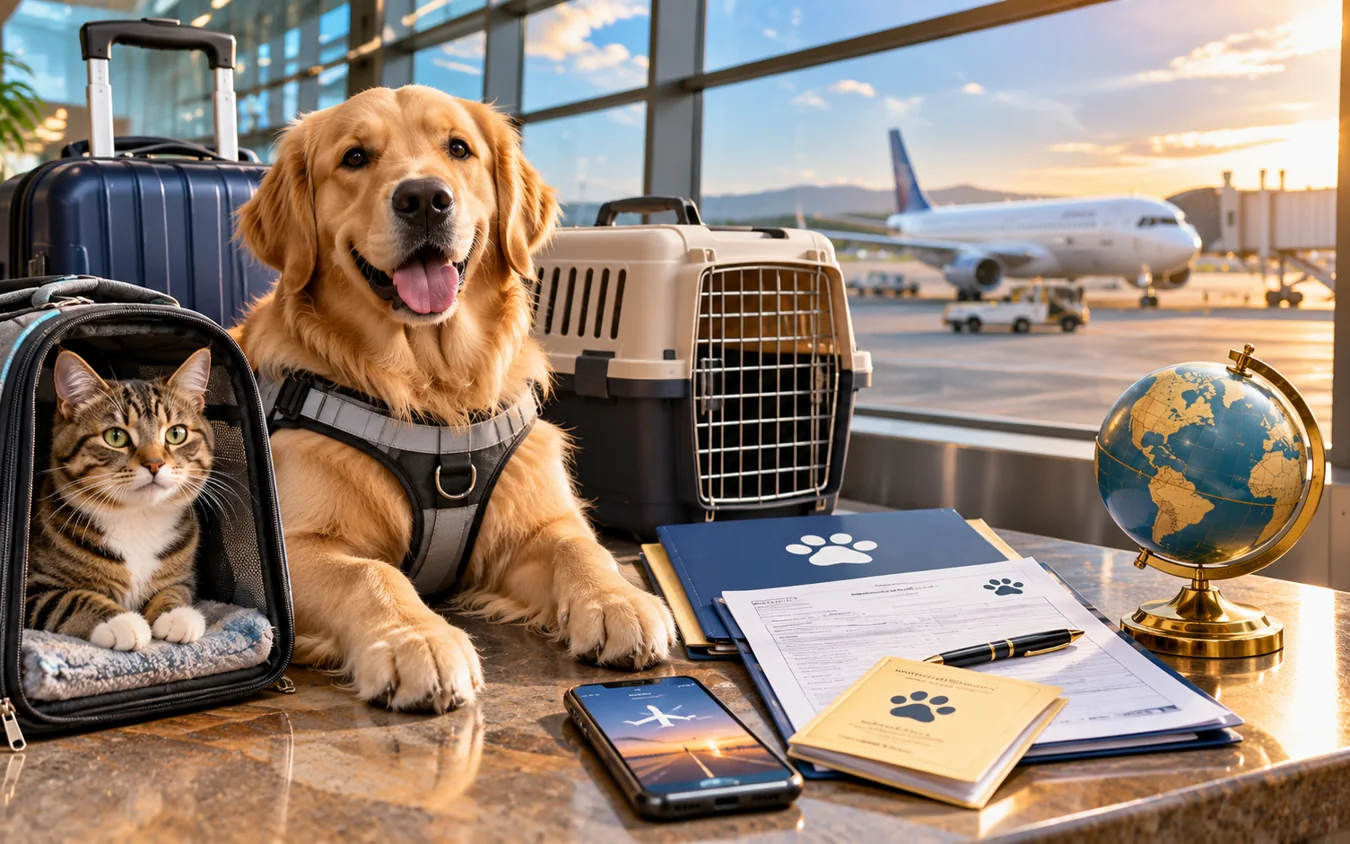
The rule that saves the most trouble: begin before you book
There is no universal pet passport or single overseas checklist from the United States. Each destination sets entry requirements, and the airline can add separate restrictions. As soon as a move becomes realistic, open the USDA APHIS page for your destination and have a USDA-accredited veterinarian build a calendar backward from your travel date.
Begin 6–9 months early when the destination is unknown, especially if Japan, Hawaii or a country requiring rabies antibody testing is an option. Even on a simpler direct route to Spain or Germany, allow time for a microchip check, vaccination records, airline pet capacity and the final endorsed certificate.
- Check pet species, age, breed, country of origin and all transit airports.
- Ask the airline if the animal can be in cabin, checked hold or manifest cargo, and reserve the pet space.
- Avoid making a nonrefundable flight reservation until your veterinarian confirms the schedule is realistic.
Microchip first, rabies vaccine second
For the EU, the microchip must be placed and read before the rabies vaccination used for travel. A vaccination given before an acceptable chip cannot simply be assumed valid for the EU paperwork. The chip number on the health certificate must match the actual animal and the vaccine documents.
For a first valid rabies vaccination under the usual U.S.-to-EU route, at least 21 days must pass before travel, or longer if the manufacturer specifies it. An expired vaccine can reset that waiting period. Keep dated records of every booster, since continuous vaccination may make later travel easier.
- Ask your vet to scan the microchip during the appointment and print the chip number on the rabies certificate.
- Make sure the vaccine expiration, animal identity and owner name match on all forms.
- Never assume a FAVN blood test is necessary just because you are flying overseas.
What is FAVN—and when is it necessary?
FAVN is a blood test measuring the rabies antibody response. It is required in certain destinations or circumstances; it is not a universal requirement to enter Europe. Dogs and cats traveling directly from the United States to Spain or Germany with valid rabies records generally do not need FAVN. Some other origins or routes into the EU do require an antibody test and a roughly three-month waiting period after the sample.
Japan has a more demanding sequence for pets from most regions: two correctly spaced rabies vaccinations, the antibody test, and at least 180 days after the blood sample before arrival. Hawaii has its own passing FAVN, vaccine-history and 30-day waiting rules. Pick the destination first, then choose an accepted laboratory and sample date with your veterinarian.
- If you are not an eligible DoD beneficiary, do not send the sample to the DoD FADL. The lab lists Auburn, Kansas State and Missouri as civilian alternatives; confirm acceptance for your destination.
- The lab’s result turnaround is not the same as the legal waiting period. A result arriving early does not shorten the country’s minimum wait.
- For high-risk origin countries, ask about vaccine history, test validity, import permits and any quarantine waiver before arranging travel.
Who issues and endorses a health certificate?
Most countries request a destination-specific international health certificate. In the United States, a USDA-accredited veterinarian generally prepares it, and APHIS endorses it when the destination requires endorsement. Not every licensed veterinarian is USDA-accredited. The U.S. does not issue a universal pet passport.
Spain and Germany use current EU non-commercial pet certificates for qualifying travel. New EU certificate forms took effect in October 2026. The timing depends on the certificate type and the date of arrival; your veterinarian should check the current country page and arrange endorsement in time. A health certificate done too early can be unusable even when the rabies vaccine is fine.
- Ask whether the accredited vet can use the USDA VEHCS electronic certification system.
- Confirm if original endorsed paper documents must travel with the animal.
- For commercial shipments or an animal traveling separately, check whether different rules apply.
Quarantine is a consequence, not a planning strategy
Some destinations can release properly documented pets at the airport; others use inspection, mandatory quarantine or restrictions that depend on where the animal lived. If required steps are missing, entry can be refused, the animal can be held at your expense or returned. A shorter holiday route can become a legal import problem when your pet changes aircraft or leaves the transit area.
For Hawaii, successful paperwork under the direct-release or five-days-or-less program can minimize quarantine, but missing the vaccination, laboratory or 10-day pre-arrival document requirements can be costly. For Japan, arriving before the 180-day clock ends can mean detention until the remaining period is satisfied.
- Check airport arrival hours for animal inspection and whether a private handler is required.
- Traveling by sea, via third countries or with more than the non-commercial pet limit may trigger different rules.
- Build a budget that can absorb an unexpected change of date or veterinary follow-up.
The realistic countdown for a typical overseas move
At 6–9 months: identify destination and route, speak to an accredited veterinarian, check chip/vaccine history and whether FAVN or an import permit is needed. Start earlier if Japan is possible.
At 3–6 months: complete vaccines and any legally timed blood draws; arrange airline pet approval and a compatible crate. At 4–8 weeks: chase lab results, inspection arrangements and permit approvals. At the final 10 days (or the destination’s own certificate window): complete the veterinary health exam and endorsement. On travel day: carry physical originals and digital backups.
- Print a page with each rule, the authority that issued it, the due date and the person handling it.
- Recheck the airline 48–72 hours before departure in case temperature or carrier restrictions changed.
- Keep medications, feeding plan and contact information accessible during travel.
Remember the flight home to the United States
CDC requires a Dog Import Form receipt for each dog entering or returning to the U.S. Dogs that have only been in rabies-free or low-risk countries in the preceding six months generally need the receipt plus minimum age, microchip and health requirements. Dogs that have spent time in a high-risk country face extra documentation and sometimes additional steps; your itinerary matters.
Cats have different federal requirements, and Hawaii, Guam and other destinations can impose separate state or territory rules. Do not assume that an EU pet passport or your original outbound paperwork automatically meets the rules for a return flight years later.
- Check the CDC dog import navigator shortly before any return flight.
- Keep boosters current even while living overseas; rebuilding a missing vaccine history is expensive.
- Use the official animal-import pages, not a social-media checklist, as your last pre-flight reference.
Official sources & verification
- USDA APHIS: Pet travel from the United States
- USDA: Find an accredited veterinarian
- USDA APHIS: U.S. to Spain
- USDA APHIS: U.S. to Germany
- European Commission: Bringing a pet into the EU
- Japan Animal Quarantine Service: Import from non-designated regions
- Hawaii Animal Quarantine: Entry instructions
- CDC: Dog importation / returning to the United States
- DoD Food Analysis & Diagnostic Laboratory (FADL)
Rules can change. Check destination and airline rules with your veterinarian before buying tickets. This guide is educational, not veterinary or legal advice.
Keep planning
PCS Overseas With a Dog or Cat? The Military FADL, FAVN Test & Timeline Guide
An early-start checklist for military families and eligible retirees: on-post or civilian veterinarians, DoD FADL forms, rabies blood tests, quarantine clocks and flight planning.
Pet FAVN & Quarantine Timeline: Spain, Germany, Japan, Hawaii and U.S. Return
Which waiting period applies to which destination? Compare rabies vaccines, blood tests, 180-day rules, paperwork windows and missed-deadline consequences.
Join the conversation
Share a useful pet-travel tip, corrected rule, or firsthand experience. Comments are reviewed before publication.
Join the conversation
Moderated comments appear only after review.
Leave a comment